Design & Technology

Design and Technology (DT) should provide children with a real life context for learning. At Meltham Moor we want to allow children to aspire to be more through creating opportunities for them in the wider world. Through the DT curriculum, children should be inspired by engineers, designers, chefs and architects to enable them to create a range of structures, mechanisms, textiles, electrical systems and food products with a real life purpose.
-
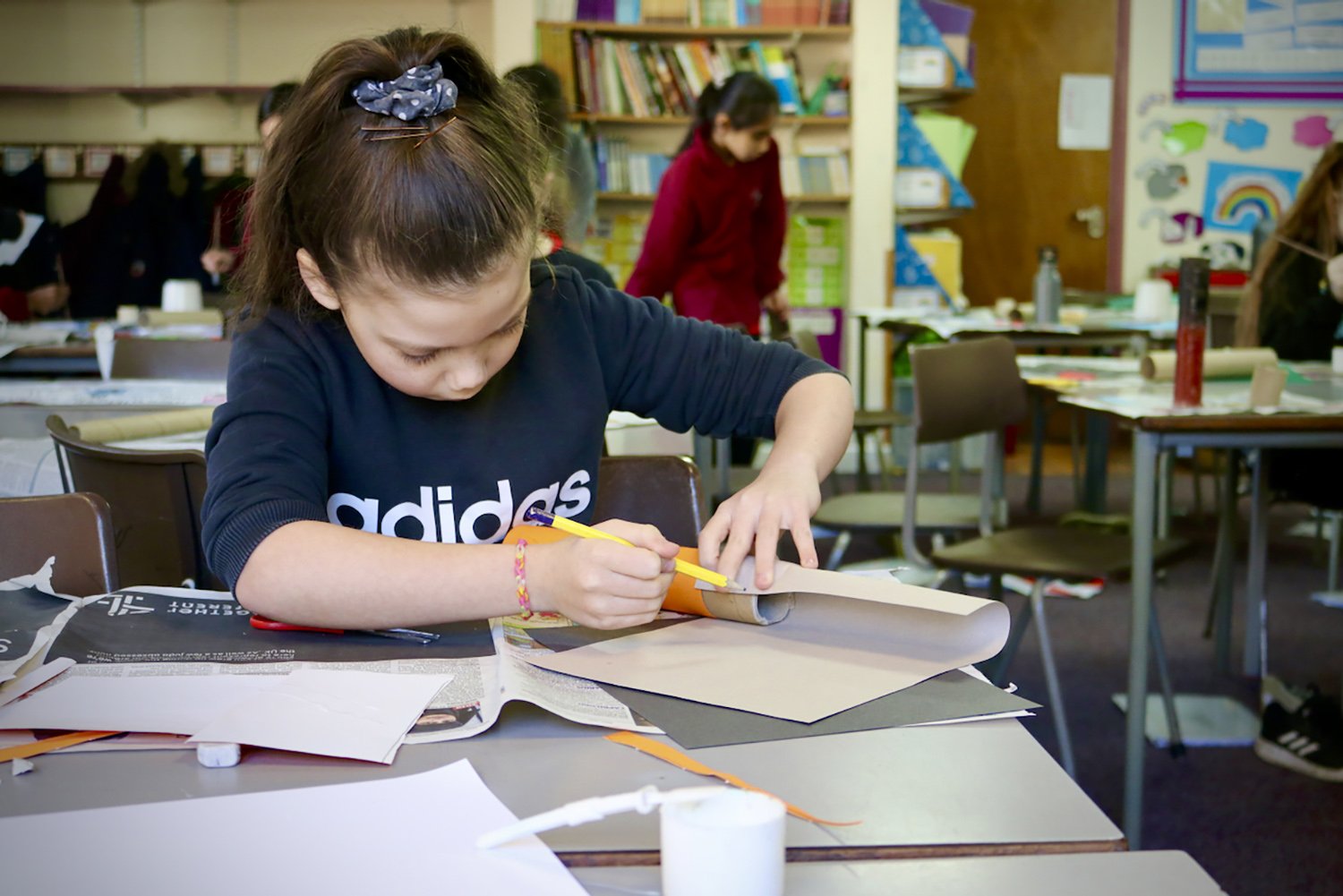
All teaching of DT should follow the design, make and evaluate cycle. Each stage should be rooted in technical knowledge. The design process should be rooted in real life, relevant contexts to give meaning to learning. While making, children should be given choice and a range of tools to choose freely from. Children should be able to evaluate their own products against a design criteria. Each of these steps should be rooted in technical knowledge and vocabulary. DT should be taught to a high standard, where each of the stages should be given equal weight. There should be evidence in each of these stages in the DT files, which should also develop to show clear progression across the key stages as they are passed up through each year group.
In KS1 this looks like:
Design:
Design should be rooted in real life, relevant contexts to give meaning to the learning.
Planned through appropriate formats: drawing, templates, talking and mock-ups.
Make:
Children should be given a range of tools for their projects to choose from.
Children should use a wide range of materials and components; textiles, construction equipment and ingredients.
Evaluate:
Evaluate existing products.
Evaluate their own products against design criteria.
In KS2 this looks like:
Design:
Rooted in real life, relevant contexts to give meaning to the learning.
Researched designs based on functional, appealing products with purpose.
Planned by appropriate methods; annotated sketches, cross-sectional diagrams, prototypes, pattern pieces and computer aided design.
Make:
Children can select from a wider range of tools than KS1
Children should use from and select a wider range of materials and components; textiles, construction equipment and ingredients.
Evaluate:
Evaluations should be in comparison to existing products.
Children should evaluate against a design criteria.
Children should understand how key events and individuals have helped shape design and technology globally – products are in context!
-
Design and Technology is a valued and high-profile subject across our school. Through a well-sequenced and progressive curriculum, pupils develop the knowledge, skills and creativity needed to become innovative thinkers, problem-solvers and confident designers. DT provides meaningful opportunities for children to apply learning from across the curriculum, particularly in science, mathematics and computing, while developing resilience, independence and teamwork. As a result of our DT curriculum:
• Pupils demonstrate increasing confidence in designing, making and evaluating products for a range of real-life purposes and users.
• Children build and secure substantive knowledge through revisiting key concepts, materials, mechanisms, structures, textiles, electrical systems and food technology across each phase.
• Pupils can talk knowledgeably about the design process and explain how their ideas develop from initial research through to final evaluation.
• Children develop practical skills safely and competently, selecting appropriate tools, equipment and materials with increasing independence.
• Pupils show creativity and innovation, taking risks in their designs while learning from mistakes and adapting their ideas.
• Cross-curricular links enable children to transfer knowledge and skills from other subjects, strengthening their overall understanding and application of learning.
• Children understand the importance of healthy eating, nutrition and food preparation and can make informed choices about food and wellbeing.
• Pupils develop perseverance, resilience and problem-solving skills when faced with design challenges, understanding that improvement comes through testing and refining ideas.
• Opportunities for collaboration ensure pupils can communicate effectively, share ideas respectfully and work successfully as part of a team.
• Children gain an appreciation of the contribution of designers, engineers, inventors and innovators who have shaped the world around them.
The impact of our DT curriculum is evident through the quality of outcomes produced by pupils, the progression seen within their knowledge and skills, and their enthusiasm for learning. Children leave each year group with a deeper understanding of the iterative design process and clear progression from their starting points. By the end of Key Stage 2, pupils are equipped with the technical knowledge, creativity and confidence needed for the next stage of their education.
Pupil voice demonstrates that children enjoy DT and understand its relevance to everyday life. They can reflect critically on their work, evaluate products against design criteria and suggest improvements. Work in DT folders (which travel with each child from Year 1-6) and practical outcomes show clear progression over time and increasing sophistication in both knowledge and application.
Ultimately, our DT curriculum develops confident, capable and creative learners who are prepared for an ever-changing technological world. They leave primary school as curious problem-solvers with the skills, knowledge and aspirations to contribute positively to their future communities and careers.